
Pine Timber Furniture Grade: Everything Importers & Manufacturers Need to Know
For furniture manufacturers and importers sourcing softwood at scale, “furniture grade” is one of the most frequently used — and most frequently misunderstood — terms in a timber specification. It does not refer to a single fixed standard, but to a tier of appearance quality that determines whether a board is suitable for visible furniture components, cabinet doors, or interior joinery, rather than structural framing hidden behind a wall. This guide explains what the term actually covers, how New Zealand Radiata Pine is graded against it, and what buyers should confirm before placing an order.
What Defines “Furniture Grade” Pine Timber?
New Zealand’s timber industry works from a long-established grading framework, the New Zealand Timber Grading Rules (NZS 3631), which sets out a range of appearance and structural visual grades and groups species into native softwoods, hardwoods, and exotic softwoods — the category Radiata Pine falls into.
It is worth understanding a limitation of this system before specifying against it: the grading rules are not written to tell a buyer what a particular grade should be used for. Their role is narrower — to visually sort timber into quality classes based on the presence and size of defects such as knots, resin pockets, and checking. In practice, this means “furniture grade” is a working industry term built on top of the underlying appearance-grade system, not a single line item you can quote directly from the standard. A reputable supplier will translate the formal grading rules into a furniture-appropriate selection — low defect frequency, consistent colour, and a clean, workable surface — but it is the buyer’s responsibility to confirm exactly what falls inside that selection for a given order [anchor: “furniture timber specification” → /resources/buyer-guides/furniture-timber-specification/].
Core Quality Grading Standards and Defect Limits for Furniture Pine
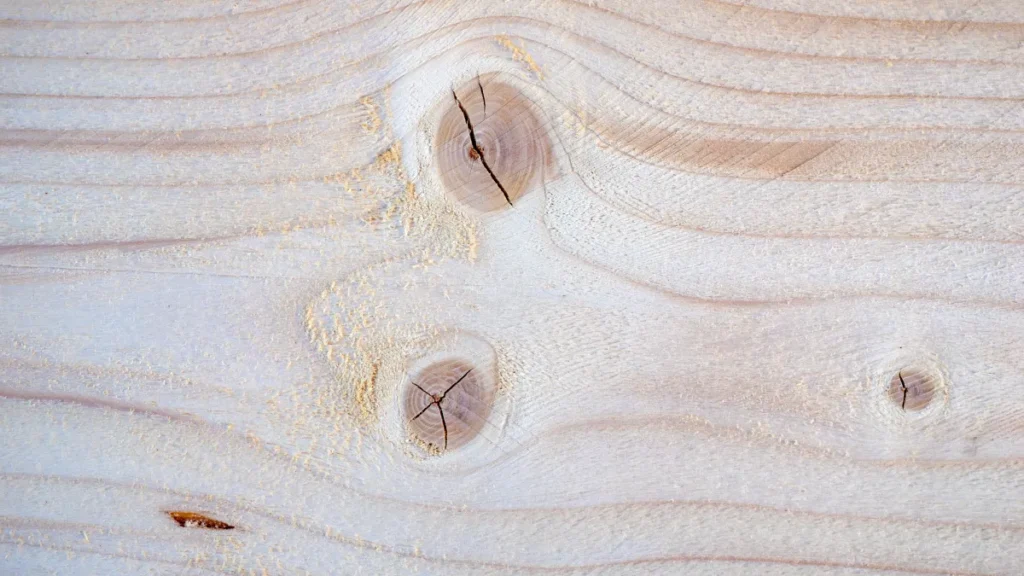
Because NZS 3631 defines quality through defect limitation rather than end-use labelling, the practical grading criteria buyers should ask about include:
- Knot size and frequency — furniture-grade material is selected for a low density of small, tight knots, with loose or large knots excluded.
- Surface and colour consistency — appearance grades prioritise a clean, uniform face suitable for staining, painting, or clear finishing.
- Structural defects — checking, splits, and resin pockets are limited more tightly than in construction-grade material, since these defects are far more visible — and far less acceptable — in a finished furniture component than inside a wall frame.
One caveat worth flagging to any buyer new to this market: because grading standards define quality by what is excluded rather than what is included, what counts as an unacceptable defect for one application can be an acceptable, even desirable, feature in another. This is why a clear, written specification — rather than a verbal request for “furniture grade” — is essential when placing an order [anchor: “joinery timber appearance grade” → /resources/technical-guides/joinery-timber-appearance-grade/].
Furniture Grade vs. Structural Grade: What Actually Changes
Buyers new to sourcing Radiata Pine often assume “grade” refers to strength. In practice, furniture and structural grades are assessed against entirely different criteria, and mixing the two up in a specification is one of the most common causes of a mismatched shipment.
| Furniture / Appearance Grade | Structural Grade | |
|---|---|---|
| Primary standard | NZS 3631 (Timber Grading Rules) | NZS 3604 (Timber-Framed Buildings) |
| What is assessed | Appearance — knot size, surface consistency, colour | Stiffness and strength for load-bearing use |
| Typical grade labels | Clear / select appearance grades (supplier-defined selection) | SG 6, SG 8, SG 10 (dry); SG 6 (Wet) |
| Moisture content target | ~6–8% (common furniture-trade industry practice, confirmed at time of quote) | Maximum 18% (per NZS 3604 design assumptions) |
| Typical end use | Furniture, cabinetry, interior joinery | Framing, trusses, load-bearing members |
This distinction matters most when you’re comparing quotes between suppliers — a low price on “graded pine” is meaningless until you know whether it was graded for appearance or for strength.
Common Defect Terms Buyers Should Know
A short glossary helps when reading a supplier’s grading sheet or discussing a claim on a shipment:
- Knots — the most common defect assessed in appearance grading; furniture grade limits both the size and frequency of knots, particularly loose or dead knots that can fall out during machining.
- Resin pockets — small cavities containing resin, which can bleed through a paint or clear finish if not accounted for in grading.
- Checking — surface splits caused by uneven drying, more likely to appear if kiln-drying schedules are not properly controlled.
- Wane — bark or rounded edge remaining on a sawn face, generally excluded entirely from furniture-grade material.
Moisture Content Requirements: Balancing Regional EMC and Furniture Manufacturing Standards
Moisture content is one of the most commercially significant specifications in a furniture timber order, because it governs dimensional stability after the timber leaves the mill.
New Zealand’s average equilibrium moisture content (EMC) sits in the 8–20% range, varying with exposure, season, and locality, and the specific moisture content timber should be dried to for a given end use is set out in New Zealand’s building and timber standards rather than being a single fixed figure. Green (undried) Radiata Pine starts well above these levels — heartwood typically carries 40–50% moisture content, while sapwood can range from 100% up to 200% or more depending on density — which is why kiln-drying is a standard, non-negotiable step before furniture-grade material is dispatched.
For the finished product, furniture and joinery applications are generally dried to a tighter, lower band than structural timber, since furniture components are thinner, more exposed to indoor climate swings, and far less forgiving of movement, splitting, or joint failure than a stud inside a wall cavity. Industry practice for furniture-grade softwood commonly targets a moisture content in the region of 6–8% at time of manufacture — a widely applied benchmark in the furniture trade rather than a single New Zealand regulatory figure — with the precise target confirmed against the buyer’s climate and application at the time of quote [anchor: “door timber moisture content” → /resources/technical-guides/door-timber-moisture-content/]. Buyers manufacturing for humid destination markets should raise this figure explicitly during specification, since the correct kiln-drying target depends as much on the end-use climate as on the timber species itself [anchor: “timber dimensional stability” → /resources/technical-guides/timber-dimensional-stability/].
Why New Zealand Radiata Pine Is Well Suited for Furniture and Joinery
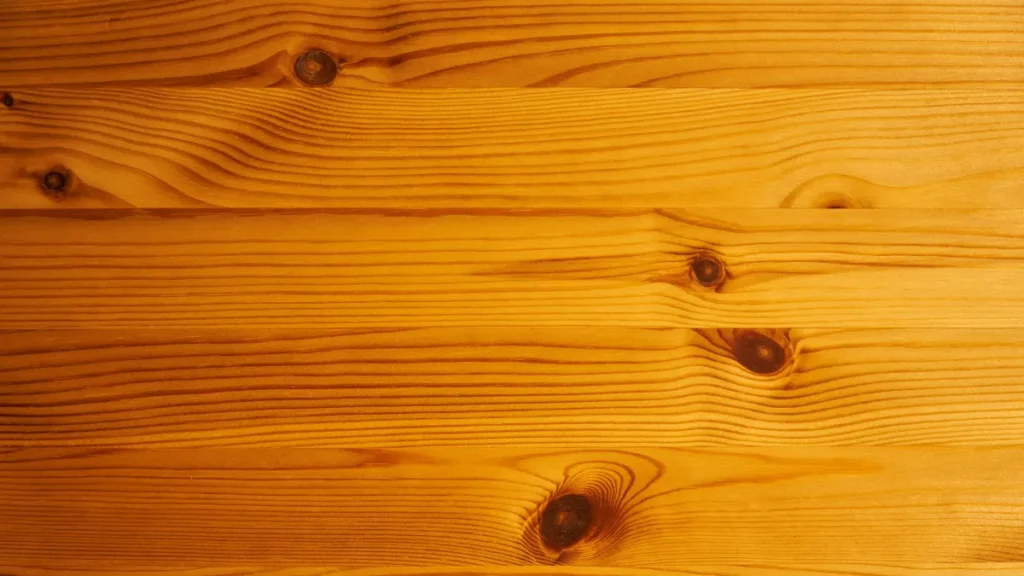
Radiata Pine has become one of the most widely traded plantation softwoods for furniture and joinery manufacturing worldwide, and its popularity in this application is well earned. The species is valued in the timber trade for its workability — it machines, turns, and glues cleanly — and for its receptiveness to paints, stains, and clear finishes, which makes it well suited to the wide range of surface treatments furniture manufacturers apply. Combined with the scale and consistency of New Zealand’s plantation supply, this workability is a major reason Radiata Pine has displaced slower-growing, less consistently available species in many furniture and joinery applications.
Buyers with highly specific mechanical or fastening-performance requirements — for example, load-bearing joinery components — should request confirmation of the relevant physical properties for their exact profile and end use at the time of quote, since these figures vary with density, moisture content, and dimension [anchor: “Radiata Pine Properties” → /resources/pillar/radiata-pine-properties/] [anchor: “Is Radiata Pine Good for Furniture” → /resources/pillar/is-radiata-pine-good-for-furniture/].
How New Zealand’s Grading Compares Internationally
Buyers sourcing from multiple regions sometimes ask how New Zealand’s grading terminology lines up with the systems they already use with other suppliers. The table below is for general orientation only — the grade names are not directly interchangeable, since each system is built around a different national standard and, in some cases, a different species.
| Region / System | Approach | Example designation |
|---|---|---|
| New Zealand (NZS 3631) | Appearance grades based on defect limitation, applied to native softwoods, hardwoods, and exotic softwoods including Radiata Pine | Supplier-defined furniture selection within the appearance-grade system |
| United States (NHLA / WWPA framework) | Appearance grading based on clear-face yield percentage or defect size | FAS (“Firsts & Seconds”), No.1 Common |
| Europe (SS-EN 1611-1, widely used for pine and spruce) | Four-sided (G4) or two-sided (G2) visual sorting, graded 0–4 by defect severity | G4-0, commonly specified for interior joinery and mouldings |
If you’re used to specifying “FAS” or “G4-0” with a European or North American supplier, ask your New Zealand supplier to map their furniture-grade selection against the criteria you’re used to, rather than assuming the labels translate directly.
How to Specify Furniture-Grade Pine in a Purchase Order
Because “furniture grade” is a working classification rather than a single certified spec, the most reliable way to avoid disputes and mismatched shipments is to put the full specification in writing at the order stage. A complete purchase order for furniture-grade Radiata Pine should confirm:
- Dimensions — nominal and finished sizes, including whether the material is required dressed all round (DAR) or rough sawn, per order specification.
- Moisture content — the target percentage on delivery, adjusted for your destination climate.
- Grade — the specific appearance grade or supplier-defined furniture selection being ordered, not just the general term “furniture grade.”
- Treatment — whether any preservative treatment is required, and to what standard, depending on the end application and destination market’s import requirements.
- Packaging — export packaging requirements, confirmed at time of quote in line with your destination country’s import and quarantine rules.
Locking in these five points at the purchase order stage — rather than relying on a general grade description — is the single most effective way to ensure that the timber arriving at your factory matches what your production line expects.
Frequently Asked Questions
Is “furniture grade” an official certification? No. It’s a working industry term built on New Zealand’s broader appearance-grading rules (NZS 3631), not a single certified line item. What falls inside a supplier’s “furniture grade” selection should always be confirmed in writing.
What moisture content should furniture-grade Radiata Pine be delivered at? There isn’t one fixed number that applies everywhere. Structural timber has an official maximum of 18% under NZS 3604, while furniture-grade material is commonly dried further, with the furniture trade typically targeting around 6–8% — confirmed against your destination climate at the time of quote.
How is furniture grade different from structural grade? Structural grades (SG 6, SG 8, SG 10) are assessed for stiffness and strength. Furniture and appearance grades are assessed for surface quality — knot size, colour consistency, and finish suitability. A board can be strong without being appearance-suitable for furniture, and vice versa.
Can I compare New Zealand grading directly to US or European grades? Only as a general reference point. NZS 3631, the US NHLA/WWPA system, and Europe’s SS-EN 1611-1 are all built on different criteria, so grade labels don’t convert one-to-one. Ask your supplier to match their selection against the criteria you’re used to.
In Summary
“Furniture grade” Radiata Pine is best understood as a working selection built on New Zealand’s appearance-grading framework, not a single certified spec — which means the details that matter most (moisture content, defect tolerance, dimensions, treatment, and packaging) need to be confirmed in writing rather than assumed from the term alone. Getting these five points right at the order stage is what separates a shipment that matches your production line from one that doesn’t.